
4 Reverse Mortgage Questions Families Ask: Manufactured Homes, Bankruptcy & More

Can a parent really get a reverse mortgage on a manufactured home? And what happens if your parents change their minds after signing, face bankruptcy, or fall behind on property taxes and insurance? These are the less-common questions adult children ask me every week, and this article answers each one with current, government-sourced facts.
Meet Diane. Her 74-year-old mother, Carol, owns a tidy manufactured home outright in a quiet community south of Sacramento. A property-tax notice caught Carol off guard, and suddenly Diane was up late researching reverse mortgages: whether the home even qualifies, what happens if her mom cannot keep up with the bills, and how hard it would be to change course once papers are signed. If that sounds familiar, you are in the right place.
1. Can a Parent Get a Reverse Mortgage on a Manufactured Home?
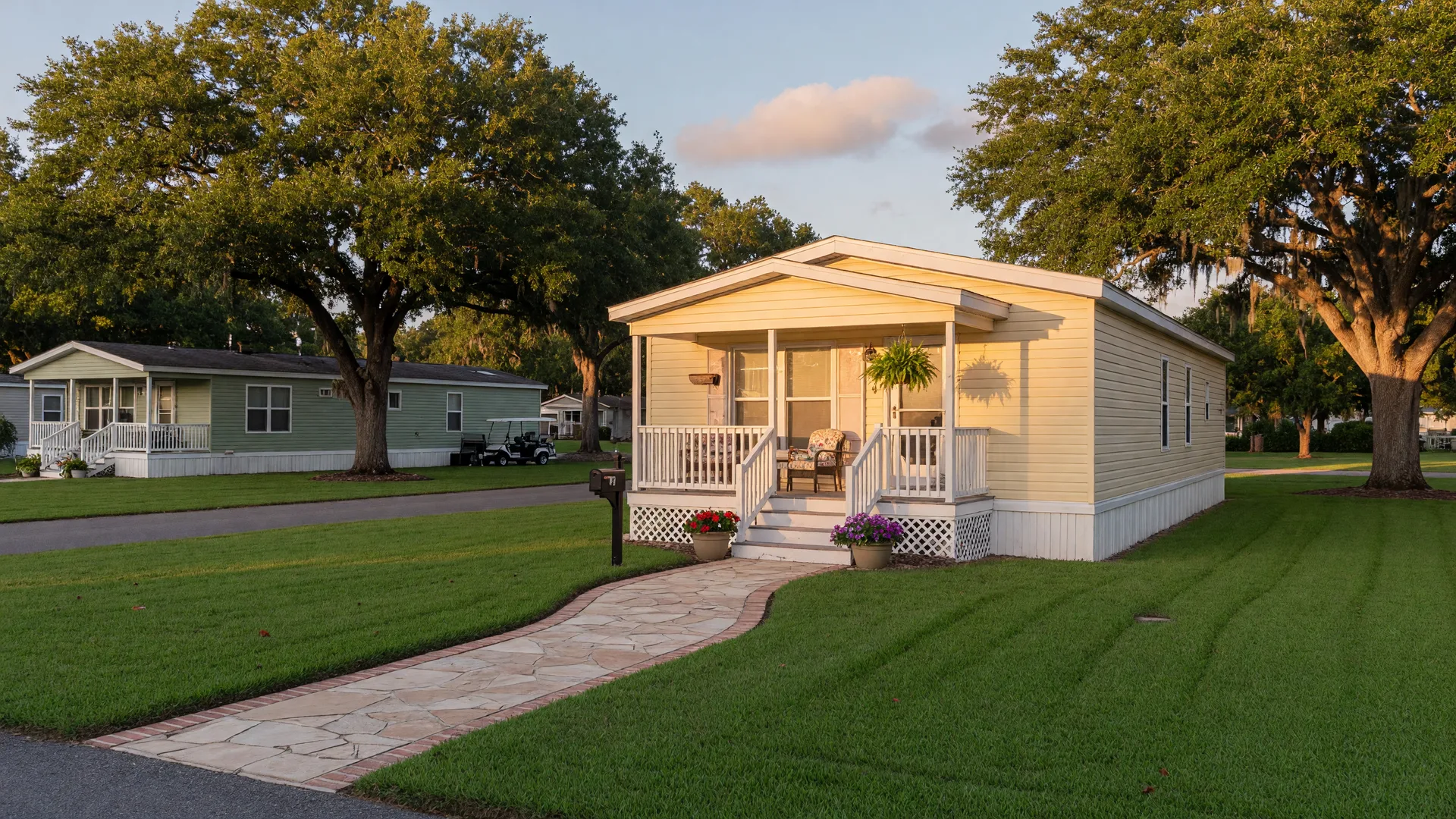
The short answer is yes, with conditions. Under rules from the U.S. Department of Housing and Urban Development (HUD), a Home Equity Conversion Mortgage (HECM), the most common type of reverse mortgage, can be arranged on a manufactured home. The important distinction is that a manufactured home must be treated as real estate, not as a true "mobile home," which is usually classified as personal property like a vehicle. A mobile home by itself generally will not qualify.
For a manufactured home to be eligible under FHA rules, it typically must:
• Be permanently attached to an FHA-approved permanent foundation, built on a permanent chassis.
• Have been built on or after June 15, 1976, the date HUD's Federal Manufactured Home Construction and Safety Standards took effect, and meet those HUD-code standards.
• Carry its original HUD Certification Labels (the exterior metal tags) and include the HUD Data Plate certifying compliance.
• Meet FHA property standards, including a minimum floor area of 400 square feet, and pass an FHA appraisal.
The borrower must also meet the standard HECM requirements: be at least 62, own the home with significant equity, and use it as a principal residence. Because FHA tightened manufactured-home standards for 2025 and 2026, lender requirements can be stricter than HUD's minimums. If your parents live in a manufactured home, the smartest first step is asking a reverse mortgage lender to confirm whether that specific unit qualifies, before anyone pays for an appraisal.
2. Can My Parents Change Their Mind After Signing?
Yes, they can. Under federal law, most reverse mortgage borrowers have a right of rescission, meaning they can cancel the loan for any reason, with no penalty, within three business days after closing. They simply notify the lender in writing, using the Notice of the Right of Rescission provided at closing. If they cancel, the lender has 20 days to return any money the borrower paid.
One caveat worth knowing: the rules can differ for a reverse mortgage used to buy a home (HECM for Purchase), so if your family is shopping for a new home rather than borrowing on the current one, ask specifically about cancellation rights before closing.
In practice, I have never met a family who regretted asking questions before signing. The HECM program requires a counseling session with a HUD-approved counselor before the loan can move forward, and that session exists precisely so nobody signs papers with surprises waiting inside. Use it. Bring your questions, including this one: "If we change our minds, what exactly happens next?"
3. What Happens to a Reverse Mortgage if a Parent Files for Bankruptcy?
This is a scary question, so let me give you the relief first: filing for bankruptcy does not, by itself, make a reverse mortgage due and payable. Under the HECM program, bankruptcy is not treated as a loan default. The bankruptcy court's automatic stay generally halts any foreclosure action, and the lender cannot simply call the loan due without going through the court.
That said, there are practical effects families should understand. Most servicers pause distributions while the bankruptcy case is open, which means access to the line of credit or monthly draws can be suspended until the court allows it to resume. The reverse mortgage lien is not wiped out by bankruptcy; it stays secured against the home. And your parents' ongoing obligations continue: property taxes, homeowners insurance, and maintaining the home as their principal residence. The loan still comes due when a triggering event happens, such as the home no longer being the principal residence or the borrower passing away.
If a parent is considering bankruptcy, talk to a bankruptcy attorney and a HUD-approved housing counselor before anything is filed. Each situation is different, and the order of operations matters.
4. What Happens if My Parents Fall Behind on Property Taxes or Insurance?
This one deserves serious attention, because unpaid property charges are the most common way a reverse mortgage runs into trouble. Even though homeowners make no monthly mortgage payments, they remain responsible for property taxes, homeowners insurance, HOA fees, and similar costs.
If a parent falls behind, the servicer may advance money to pay the delinquent charges, adding those amounts to the loan balance. If the arrearage is not resolved, the loan can be approved to be accelerated, meaning it becomes due and payable, and continued nonpayment can ultimately lead to foreclosure.
But there are options, and knowing them before a crisis is half the battle:
• A repayment plan, which lets the family catch up on the arrears over time.
• Reinstatement, paying the full amount owed in a single lump sum.
• A mortgagee-funded cure, where the servicer pays the outstanding charges from its own funds and the borrower repays them.
• Deferral of due-and-payable status for small arrears, and an extension for borrowers over 80 or facing critical health circumstances.
Many of these options are voluntary for servicers, which is exactly why the advice from housing counselors is always the same: contact the servicer early, before the situation worsens. For many borrowers, a simpler prevention already exists. HUD's financial assessment can set aside part of the loan proceeds in a Life Expectancy Set-Aside (LESA) that pays property taxes and insurance automatically, so these bills are handled before they become a problem.
The Takeaway for Families
Here is what I hope Diane, and you, take away from all this. Manufactured homes can qualify for a reverse mortgage, parents can absolutely change their minds within the cooling-off period, bankruptcy does not automatically trigger the loan, and falling behind on property charges is the situation to plan around, not fear in silence.
Every one of these scenarios is more manageable with early, honest conversation. A reverse mortgage is a federal program with built-in protections, but it works best for families who understand the responsibilities that come with it. That is my job: helping families see the full picture before they decide, and reassuring them that their parents' home equity can be a source of security, not worry.
If you have questions like Diane's about your own parents' situation, you are not alone, and there is no cost to asking them.
Have Questions About Your Parents' Situation? Let's Talk.
I offer a free, no-obligation consultation to help you and your family understand your options, including whether a manufactured home qualifies and how to plan for property taxes and insurance. I am a Loan Officer at Emery Financial, licensed in California, Arizona, Colorado, Florida, Texas, and Washington, and I have spent my career explaining complex loan processes in plain, reassuring terms.
Schedule a Free ConsultationDisclaimer: This article is for general informational and educational purposes only and does not constitute financial, legal, or mortgage lending advice. Loan programs, interest rates, terms, and conditions are subject to change and vary based on borrower qualifications. Reverse mortgage eligibility requirements apply, including age, occupancy, and property standards. Bankruptcy matters should be reviewed with a qualified bankruptcy attorney, and benefit or tax questions with a qualified professional. Always consult with a qualified financial advisor, tax professional, or attorney regarding your specific circumstances. Adam Heaney, NMLS #283076, is a Loan Officer at Emery Financial, 3432 Via Oporto, Suite 208, Newport Beach, CA 92663.