
Reverse Mortgage FAQ: Existing Loans, Buying a Home, Taxes & Benefits

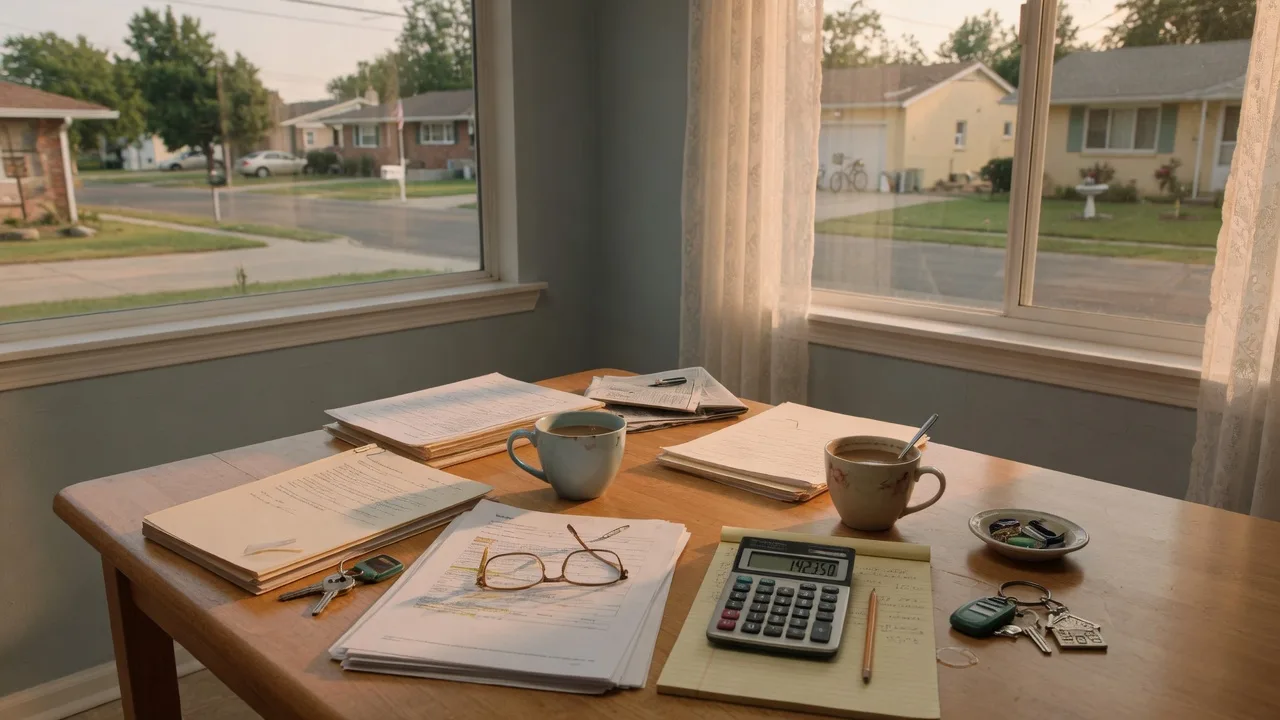
Four reverse mortgage questions come up again and again in my conversations with adult children, CPAs, and trust attorneys: Can parents get a reverse mortgage while they still owe on their current home loan? Can they use one to buy a new home? Is the interest tax-deductible? And do the funds affect benefits like SSI or Medicaid? The short answers: yes, if there is enough equity, because the loan pays off the old mortgage at closing; yes, through HECM for Purchase, though it takes a substantial down payment; the interest is deductible only in the narrow cases the IRS allows, and only when actually paid; and the proceeds are not income, but unspent funds can count as assets for means-tested programs. Here is what the current rules say.
Meet Marc, a financial analyst in Denver. His father, Richard, 72, is widowed and still owes about $52,000 on the family home, which recently appraised around $390,000. Marc is doing the research his dad asked for. If you are doing the same homework for your parents, here is what I want you to know.
1. Can Parents Get a Reverse Mortgage If They Still Owe on Their Current Mortgage?
Yes, and I hear this question constantly. The key rule: a Home Equity Conversion Mortgage, or HECM, must be in the first lien position, meaning the only mortgage on the home. So any existing mortgage balance must be paid off, satisfied, or extinguished at or before closing. For most families, that simply means the reverse mortgage pays the old loan off.
Here is how it happens. Under HUD rules, the old balance is a mandatory obligation, so at closing the lender sends the payoff directly to the existing mortgage company out of the reverse mortgage proceeds, before any money goes to the borrower. Richard would trade a $52,000 balance and a monthly payment for a loan with no payment required, and he keeps title in his own name.
The trade-off: the payoff comes out of the money he could otherwise receive. How much a HECM can provide is based on his age, the home's value, and current interest rates, and the existing balance plus closing costs is subtracted from that amount. If the proceeds fall short, the difference must be paid in cash at closing.
What replaces the old monthly payment? Property taxes, homeowners insurance, and routine maintenance. Every borrower passes a financial assessment confirming they can handle those costs.
2. Can Parents Use a Reverse Mortgage to Buy a New Home?
Yes, through the HECM for Purchase program, which lets a buyer age 62 or older purchase a home with a reverse mortgage in a single closing. For a parent like Richard who finds the family home harder to manage, it can mean buying a one-story home near family without a monthly mortgage payment. He sells the current home, and the proceeds become the down payment on the new one. The reverse mortgage finances the rest.
The number that surprises most families is the size of that down payment. Because the loan typically covers only about half of the purchase price, buyers generally put down roughly 45 to 62 percent, depending on the youngest borrower's age, interest rates, and closing costs. Older buyers qualify for smaller down payments.
The new home must be the buyer's principal residence, and everything else works like any HECM: HUD-approved counseling, a financial assessment, and the ongoing responsibility to pay property taxes, insurance, and maintenance. No monthly principal and interest payments while the buyer lives there.
3. Is Reverse Mortgage Interest Tax-Deductible?
The financial professionals in the room always ask this one, and the honest answer is: sometimes, under specific conditions. First, the reassuring part: reverse mortgage proceeds are loan proceeds, not income, and never have to be reported as taxable income.
The deduction is trickier. Under IRS rules, interest on a reverse mortgage is deductible only in the year it is actually paid, which usually means when the loan is paid off, such as when the home is sold or an estate settles the loan. It is not deductible each year as it accrues, simply because no payments are being made. A borrower who voluntarily pays interest can claim the deduction in the year of that payment.
There is a second layer that surprises people. Under current IRS rules, reverse mortgage interest is generally treated as home-equity debt interest, which is not deductible. But the portion of the proceeds used to buy, build, or substantially improve the home counts as home acquisition debt, and interest on that portion may be deductible when paid, subject to the $750,000 acquisition debt limit for loans taken after December 15, 2017 ($375,000 for married filing separately).
Taking the deduction also requires itemizing, so many families receive no tax benefit at all. Keep clear records of what the proceeds were used for, and have the family's tax professional work through the specifics.
4. Do Reverse Mortgage Funds Affect SSI, Medicaid, or Food Assistance?
Reverse mortgage proceeds are not counted as income by the Social Security Administration, but that is not the whole story. SSI, Medicaid, and SNAP are means-tested, so they look at both income and assets.
The key is timing. Money spent in the same month it is received is not counted as an asset; money still in a bank account the following month can count as a countable resource. For SSI, the resource limit is $2,000 for an individual and $3,000 for a couple, with the home itself excluded. A parent who draws a large lump sum and leaves it in savings could lose eligibility, while the same money spent promptly on care, repairs, or a new roof would not be an issue.
Medicaid asset limits vary by state, and SNAP varies by state as well, with many states using categorical eligibility that sidesteps an asset test entirely. Social Security retirement benefits and Medicare are not means-tested, so a reverse mortgage does not affect them. This is the one question where I always send families to an elder law attorney or benefits specialist who works in their state, to confirm the details before closing.
The Takeaway for Families
Marc's homework produced four clear answers. His father can use a reverse mortgage to pay off the $52,000 balance and end the monthly payment, as long as the numbers support it. If Richard later wants a smaller home, HECM for Purchase can do it. The interest deduction is narrow and usually deferred until the loan is paid. And the benefits question is manageable, with unspent funds spent or planned around with professional help.
Every family's numbers are different, which is exactly why I recommend a conversation before anyone decides. If you are researching this for your own parents, we can walk through what they owe, what the home is worth, how the purchase option works, and how their benefits fit in. No obligation, no pressure, just straight answers in plain language.
Have Questions About Your Parents' Situation? Let's Talk.
I help families understand reverse mortgages from every angle: paying off an existing mortgage, buying a new home with a HECM for Purchase, the tax details, and how funds interact with benefits. I am a Loan Officer at Emery Financial, licensed in California, Arizona, Colorado, Florida, Texas, and Washington, and I have spent my career explaining complex loan processes in plain, reassuring terms.
Schedule a Free ConsultationDisclaimer: This article is for general informational and educational purposes only and does not constitute financial, legal, tax, or mortgage lending advice, and it is not financial advice. Loan programs, interest rates, terms, and conditions are subject to change and vary based on borrower qualifications. Down payment ranges, tax rules, and benefit thresholds described are based on current HUD/FHA, IRS, and Social Security rules as of the publication date and may change; always confirm current terms with a HUD-approved counselor, a tax professional, an elder law attorney, or a qualified loan officer. Reverse mortgage eligibility requirements apply, including age, occupancy, property, and financial assessment standards. Adam Heaney, NMLS #283076, is a Loan Officer at Emery Financial, 3432 Via Oporto, Suite 208, Newport Beach, CA 92663.